| The American Plate Number Single Society | ||
|
HOME
MEMBERSHIP
PUBLICATIONS LINKS
|
Examples of prefixes used by private printers
No letter prefix: Bureau of Engraving and Printing (BEP)
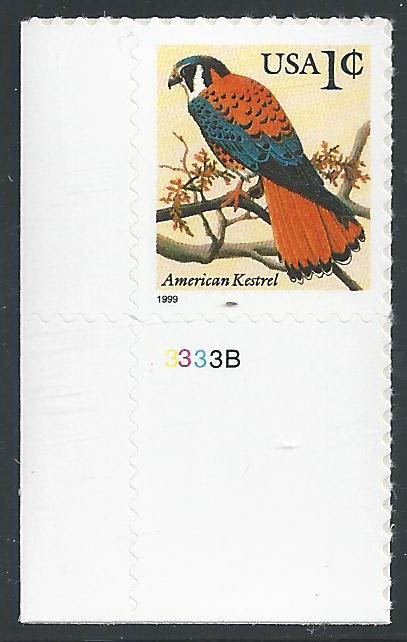
Note that letter suffixes indicate BEP printings that have gone past 9 plate numbers. For example, if plate number combinations 1111 through 9999 have been used, the 10th plate is numbered 1111A, the 11th 2222A and so on, with the 19th plate 1111B.
Scott 3031, 1¢ Kestrel self-adhesive sheet stamp, LL plate numbers 5644A amd 3333B The BEP suffix A indicates that the yellow 5 is the 14th plate, the red 6 is the 15th plate, and the blue and black 4's are the 13th plates for those colors. Scott 3031 is the most prolific example of suffixes. It was printed with 11 plate number combinations with no prefix, 15 combinations with suffix A, 9 combinations with suffix B, and a single example with suffix C, plate number 1111C.
A: American Bank Note Company (ABNC) In use 1983 - 1994
Note that the "A" appearing before plate numbers on early Washington-Franklin stamps is not considered a prefix, nor even part of the plate number. It was an indication of spacing between stamp images for perforating.
Scott 375, 2¢ Washington, plate number 5563, with A to indicate image spacing for perforation guide
B: Banknote Corp. of America (BCA) In use from 1994
BCA lost its contract to print U.S. stamps and was purchased by Sennett Enterprises in January 2004. BCA's division of Sennett still prints stamps, but from 2004 to 2015 they used the 'S' Sennett prefix for most issues. In 2016, starting with the $22.95 Columbia River Gorge express mail stamp, the 'B' prefix was reinstated for some issues.
C: CCL Industries In use 2013 - 2015
In July 2013, CCL Industries purchased the stamp-producing division of Avery Dennison. Stamps printed by CCL have a 'C' prefix. CCL lost the contract in 2015, so usage of the C prefix was quite brief.
D: Dittler Brothers Incorporated In use 1993 - 1994
Scott 2599b, 29¢ Statue of Liberty self-adhesive booklet stamp, also issued in coil format, plate number D1111
F: Bureau of Engraving and Printing / "Finished" flat plate printings Starting about 1915, the BEP prefixed the top plate number on top right panes of virtually all flat plate issues with an "F". This prefix did not indicate a printer, but rather that the plate had been finished. Due to occasional mistakes on a handful of plates, with the F appearing on the top left pane, or a bottom or side plate number position, or inadvertently followed the plate number. But the vast majority were on top right panes. The practice was discontinued in the mid-1930s, just as rotary printings were taking over virtually all stamp printing functions. The small number of later flat plate printings omitted the F.
G: Guilford Gravure, Inc. In use 2000 - 2002
The "G" prefix appears only on a few coil issues.
K: KCS Industries In use 1993
Technically, these stamps were printed by Sennett Security Products (see "S" prefix below). However, Sennett's booklet stamps were were finished into booklets by KCS Industries, so Sennett printed the stamps themselves with a K prefix.
LT, LTB: Bank Note Company of America, "Road Runner" Looney Tunes stamp
These prefixes were used during the printing of the 33¢ Coyote & Road Runner Looney Tunes souvenir sheets, Scott 3391. They can be seen in the selvage of the uncut press sheets of that printing. Of the five Looney Tunes stamps, this was the only printing done by Bank Note Company of America, and the only one on which prefix LT was used. Plate number LT001 appears in black, light blue and dark red on the front of the press sheet, and LTB001 in black appears on the back.
M: 3M Company In use 1997
Scott 3132, (25¢) presorted first class coil, experimental, plate number M11111. The perforation "holes" on this self-adhesive stamp are actually printed circles. 3M printed some experimental self-adhesive coil stamps in the late 1990's.
P: Ashton-Potter America (AP) In use from 1994
S: Stamp Venturers (SV), also Sennett Security Products (SSP) In use from 1994
T: Bureau of Engraving and Printing (BEP) test coil Used for one stamp in 1995
All stamps of the BEP-printed test coil appear with "T" in the bottom center, so "T1" should not be considered a plate number prefix in the same sense as the other letters illustrated here.
U: United States Bank Note (USBN) In use 1990 - 1991
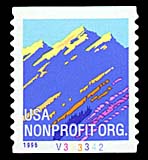
V: Avery Dennison In use from 1998
VA: "Porky Pig" Looney Tunes stamp
The prefix VA was used during the printing of the 34¢ Porky Pig Looney Tunes souvenir sheets, Scott 3534. They were not regularly issued but can be seen in the selvage of the uncut press sheets of that printing. 15 plates were used, ranging from VA045 through VA061, skipping 53 and 55.
VO: "Bugs Bunny," "Sylvester & Tweety" and "Daffy Duck" Looney Tunes stamps and press sheets
The prefix VO was used during the printing of the Bugs Bunny (Scott 3137), Sylvester & Tweety (Scott 3204) and Daffy Duck (Scott 3306) Looney Tunes souvenir sheets. They were not regularly issued but can be seen in the selvage of the uncut press sheets of those printings as well as on some press sheets of regular stamps from the same era.
Scott 3324 var, Rollerblading single from 33¢ Extreme Sports press sheet, additional plate numbers VO2635 through VO2638 in margin
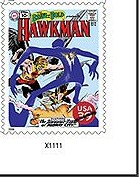
X: U.S. Postal Service illustration When the Postal Service releases preliminary images of future stamp issues in press releases or the quarterly philatelic bulletin, the illustrated plate numbers are generally in the format "X11" or "X1111", depending on how many colors are expected to be used in the printing process. The actual security printer contracted to print the issue, and thus the likely initial plate number, can generally be inferred from other details of the upcoming stamp issue. Plate numbers prefixed by X do not actually appear on printed U.S. stamps.
Scott 4084t var, mockup of 39¢ Comics single from USPS publicity image, 39¢ denomination defaced by USPS, plate number X1111 Stars: 5 point, 6 point, hollow, filled: BEP BEP used various sizes, shapes and styles of stars near plate numbers on early Washington-Franklin stamps and a few Fourth Bureau issues. This is not considered a prefix, nor even part of the plate number. It was an indication of plate finishing, plate status, spacing between stamp images for perforating, or other reasons in the making of plates or production of stamps. Other types of letters: BEP Other letters appearing in marginal markings are generally not near the plate number and thus would not be confused as a possible prefix. Examples are printer's initials, added to the left margin of stamps from the 1890's to about 1910 each time a plate was checked out for printing, and which sometimes extended across the top margin as well; C, CC or CCC appearing in the top right stamp of some flat plate issues of the 1930's; CI to indicate another type of flat plate finishing; the word TOP on bicolor issues of the 1920's, in an attempt to avoid the inverts that had occurred on Pan American issues and, famously, on the 24¢ Jenny airmail.
Comments? Suggestions? Email the
Webmaster: This page last updated May 6, 2020.
|
 Scott
2452, 5¢ Circus Wagon coil, plate number 1
Scott
2452, 5¢ Circus Wagon coil, plate number 1
 Scott
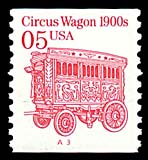
2452Bf, 5¢ Circus Wagon coil, plate number A3
Scott
2452Bf, 5¢ Circus Wagon coil, plate number A3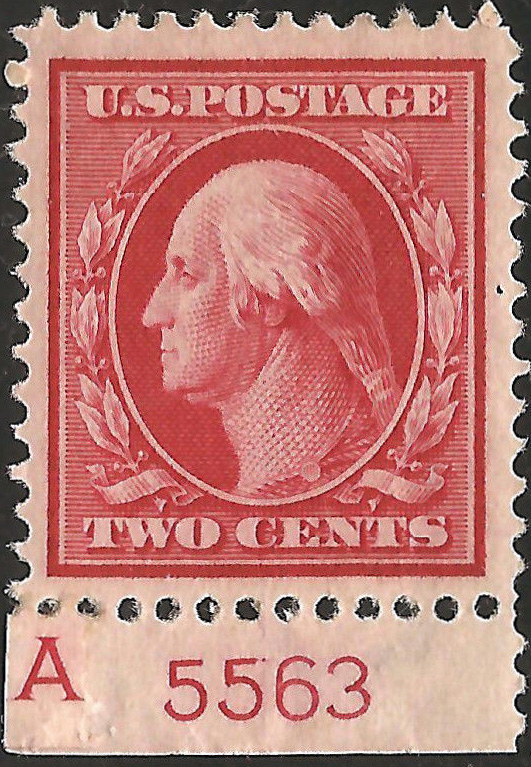
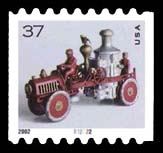 Scott
3640, 37¢ Fire Pumper, plate
number B122222
Scott
3640, 37¢ Fire Pumper, plate
number B122222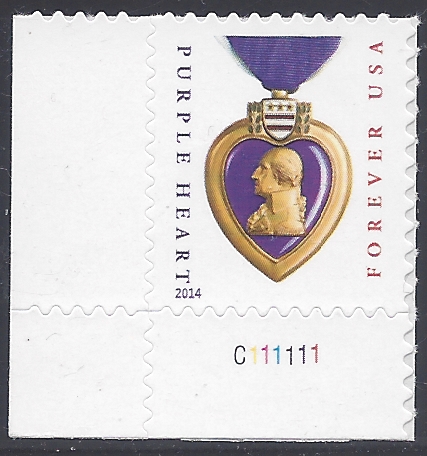 Scott 4704a,
(49¢) Forever Purple Heart with 2014 date, plate number C111111
Scott 4704a,
(49¢) Forever Purple Heart with 2014 date, plate number C111111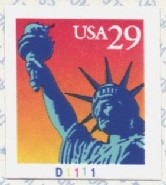
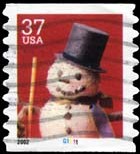 Scott
3682, 37¢ Snowman coil, used,
plate number G1111
Scott
3682, 37¢ Snowman coil, used,
plate number G1111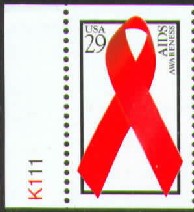 Scott
2806a, 29¢ AIDS Awareness single
from booklet pane of 5, plate number K111
Scott
2806a, 29¢ AIDS Awareness single
from booklet pane of 5, plate number K111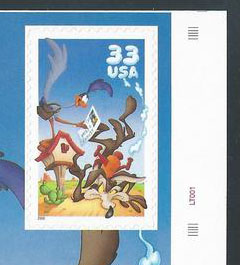

 Scott
3785, (5¢) non-profit coil, plate number P1111
Scott
3785, (5¢) non-profit coil, plate number P1111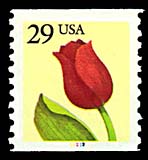 Scott
2526, 29¢ Tulip coil, plate number S2222
Scott
2526, 29¢ Tulip coil, plate number S2222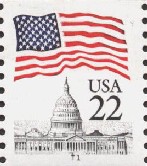 Scott
2115b, 22¢ Flag over Capitol Test coil, plate number T1
Scott
2115b, 22¢ Flag over Capitol Test coil, plate number T1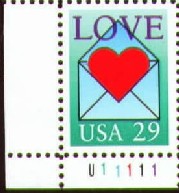 Scott 2618, 29¢ Love Envelope, plate number U11111
 Scott
2904A, (5¢) non-profit coil,
plate number V333342
Scott
2904A, (5¢) non-profit coil,
plate number V333342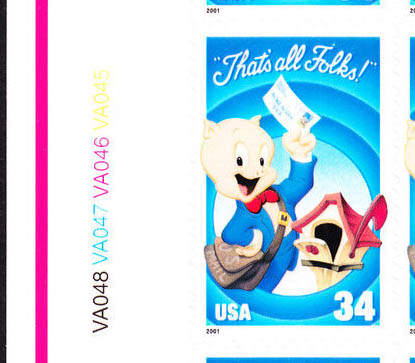 Scott
3534 var, 34¢ Porky single from
press sheet, plate number VA045 through VA048
Scott
3534 var, 34¢ Porky single from
press sheet, plate number VA045 through VA048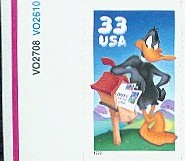 Scott
3306 var, 33¢ Daffy single from
press sheet, plate number VO2708 and VO2610
Scott
3306 var, 33¢ Daffy single from
press sheet, plate number VO2708 and VO2610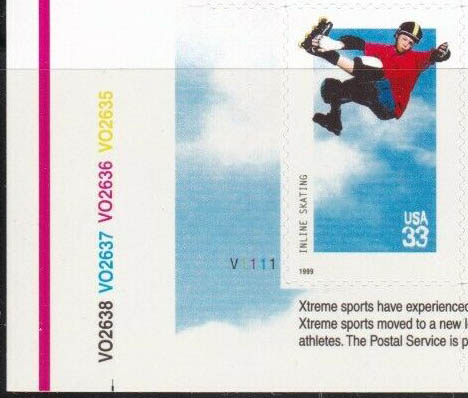
 .
.
